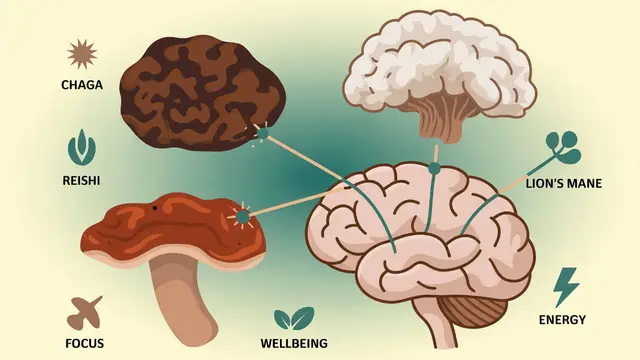
Biohacking Your Brain: Nootropics vs. Lifestyle Interventions for Focus and Memory

In the quest for enhanced cognitive performance, we're bombarded with promises of "smart pills" and brain-boosting supplements. But do nootropics really deliver on their claims, or are lifestyle interventions the true key to unlocking our mental potential? Let's dive into the science to separate hype from evidence-based reality.
The Verdict: Lifestyle Changes Outperform Pills for Long-Term Brain Health
While nootropics can provide measurable short-term cognitive boosts, structured lifestyle interventions deliver superior, sustained improvements in focus and memory with significantly fewer risks. The landmark U.S. POINTER study demonstrates this compellingly: participants in a structured lifestyle program performed cognitively like people nearly two years younger compared to those following self-guided approaches. For optimal brain health, the evidence suggests that integrating key lifestyle foundations-particularly sleep, exercise, nutrition, and cognitive engagement-provides more durable cognitive enhancement than chemical supplementation alone.
Understanding Nootropics: What the Science Actually Shows
Nootropics encompass a wide range of compounds, from your morning coffee to sophisticated synthetic substances and plant-derived supplements. These substances work by boosting neurotransmitter function, improving synaptic plasticity, enhancing cerebral blood flow, and supporting mitochondrial efficiency.
Synthetic and Pharmaceutical Nootropics
Prescription stimulants like amphetamines and modafinil show rapid cognitive benefits, particularly for attention, inhibitory control, and processing speed. Research published in peer-reviewed journals demonstrates that acute ingestion of multi-ingredient nootropics can significantly improve reaction time, spatial working memory, and cognitive flexibility compared to placebo, with effect sizes ranging from 0.4 to 0.6.
Caffeine combined with L-theanine represents one of the most well-researched nootropic combinations, showing particular effectiveness for attention-switching tasks and reducing susceptibility to distracting information.
However, prescription stimulants carry substantial long-term risks. Extended use beyond five years correlates with approximately 27% increased cardiovascular disease risk for Adderall users, persistent blood pressure increases, and neurological adaptations through dopamine receptor downregulation. Psychological dependency develops in 15-30% of long-term users, and tolerance frequently requires escalating doses.
Natural Nootropics: A Gentler Approach
Plant-derived compounds like Bacopa monnieri, Ginkgo biloba, and Ashwagandha (Withania somnifera) provide more moderate effects with superior safety profiles. Bacopa monnieri demonstrates clear nootropic activity on free recall memory, with studies showing improved language comprehension, learning rates, and memory consolidation in healthy subjects. These compounds operate through anti-inflammatory, antioxidant, and neuroprotective mechanisms.
Creatine monohydrate supplementation shows moderate benefits, with meta-analyses indicating significant positive effects on memory and attention time, though evidence remains moderate-to-low certainty for broader cognitive domains.
The Four Pillars of Lifestyle-Based Cognitive Enhancement
1. Sleep: Your Brain's Foundation
Sleep represents the most impactful modifiable factor for brain health. The optimal sleep duration is 7-8 hours; deviations significantly impair cognitive function. Sleep deprivation primarily damages simple and complex attention, working memory, executive function and reasoning, and long-term memory consolidation.
The neurological consequences are profound. Sleep deprivation reduces activity in the hippocampus, thalamus, prefrontal cortex, and anterior cingulate cortex-brain regions essential for memory encoding and emotional regulation. Research demonstrates that sleep duration changes produce cognitive performance effects equivalent to a 4-7 year increase in age. Even one night of total sleep deprivation impairs working memory, and chronic sleep restriction produces lasting deficits in attention, memory consolidation, and higher cognitive abilities.
Sleep deprivation disrupts prefrontal inhibition of memory retrieval, allowing intrusive memories to surface, with REM sleep crucial for restoring this prefrontal memory control capacity.
2. Exercise: Nature's Cognitive Enhancer
Physical activity stands as perhaps the most evidence-supported cognitive enhancer available, triggering brain-derived neurotrophic factor (BDNF) production-a protein essential for neuroplasticity and cognitive function.
Key findings from exercise research:
- Aerobic training improves global cognition with effect sizes of 0.28–0.76
- Resistance training shows stronger effects on executive function (effect sizes up to 0.80)
- Combined aerobic and resistance programs enhance attention, executive function, and overall cognition
- Moderate-to-high intensity exercise produces the most robust BDNF increases and memory improvements
The mechanism involves BDNF-mediated synaptic plasticity and neurogenesis. When cognitive training immediately follows physical exercise, exercise-induced BDNF increases facilitate learning gains. This finding has profound implications: strategic timing of exercise before cognitive demands maximizes benefit.
3. Nutrition: Fueling Your Brain Optimally
Dietary patterns significantly influence cognitive function across multiple mechanisms. The Mediterranean diet shows the most robust evidence, with adherence associated with 2-year improvements in general cognitive screening, executive function, attention, and processing speed. The MIND diet (Mediterranean-DASH Intervention for Neurodegenerative Delay) specifically targets brain health through antioxidant-rich foods, leafy greens, blueberries, and fish rich in EPA and DHA.
Essential nutritional components for brain health:
- Omega-3 fatty acids (EPA and DHA): Essential for neuronal structure, communication, and protection against neurodegenerative disease
- B vitamins and folate: Daily supplementation with B12 and folic acid promotes improvements in cognitive function, particularly immediate and delayed memory
- Polyphenols and antioxidants: Strong evidence supports their cognitive benefits through neuroprotection
- Micronutrient status: Deficiencies in vitamin B12, iron, zinc, and omega-3s link directly to cognitive decline, memory loss, and attention problems
Systematic reviews of nutritional interventions found that the Mediterranean diet showed the strongest evidence for cognitive preservation, while healthy dietary patterns generally improved cognitive function across domains.
4. Cognitive Engagement and Mindfulness Meditation
Mindfulness meditation produces rapid, measurable cognitive improvements. A study using precise eye-tracking measures found that just 30 days of guided mindfulness meditation significantly enhanced reaction speed, goal-directed focus, and reduced distractibility. Participants moved their eyes toward target shapes more quickly, showing efficient visual processing, and demonstrated more direct eye movements toward targets with less fixation on irrelevant but visually salient items.
Mindfulness meditation improves specific executive function components through alterations in the anterior cingulate cortex and autonomic nervous system. Even short-term training produces lasting cognitive benefits, with improvements comparable to or exceeding audiobook controls in several attention domains.
Head-to-Head: The U.S. POINTER Study Evidence
The landmark U.S. POINTER study involving 2,111 participants directly compared structured lifestyle intervention to self-guided approaches over two years. The structured intervention included 38 peer-group sessions with trained facilitators, tailored exercise routines, MIND diet nutrition guidance, online brain training, and consistent medical monitoring. The self-guided group received only 6 sessions with general educational materials.
Results after two years:
- Structured group improved cognitive scores 0.243 standard deviation units annually
- Self-guided group improved 0.213 units annually
- The structured program edge matches or exceeds gains from Finland's FINGER study
- Benefits persisted across APOE genetic status
- Those with lower baseline cognition benefited most (nearly double improvement)
This represents genuine cognitive preservation equivalent to aging 1-2 years slower-a clinically meaningful difference absent from most single-nootropic studies.
The Dark Side of Nootropics: Risks You Need to Know
Placebo Effects and Psychological Dependence
A critical consideration: placebo effects substantially contribute to perceived nootropic benefits. Research demonstrates that expectation of receiving a cognitive enhancer alone can improve both perceived and actual performance, while expecting a placebo produces the opposite nocebo effect. This suggests many nootropic responses reflect psychological factors rather than pharmacological action.
Extended nootropic use creates concerning dependency patterns. Users report difficulty functioning at previous levels without the substance, withdrawal symptoms including fatigue, depression, and intense cravings upon discontinuation, and downregulation effects where extended dopaminergic stimulation reduces baseline dopamine sensitivity.
Variable and Inconsistent Effects
Plant-derived nootropics show mixed evidence. While Bacopa monnieri demonstrates robust effects on memory, many others produce inconsistent results. Ginkgo biloba shows dose-dependent memory improvement in some studies but no significant effects in others, highlighting the unpredictability of natural nootropic responses.
The Integrated Approach: Best of Both Worlds
The optimal strategy combines lifestyle foundations with targeted, evidence-based supplements rather than relying on either alone.
Foundation Layer (Primary Focus)
- 7-8 hours sleep nightly
- 150+ minutes moderate aerobic exercise weekly, ideally before cognitive demands
- Mediterranean or MIND dietary pattern
- 15-30 minutes daily mindfulness meditation or cognitive engagement
Enhancement Layer (Secondary Support)
- Caffeine + L-theanine for acute focus demands (effect sizes 0.4-0.6)
- Omega-3 supplementation if dietary intake insufficient
- B vitamin supplementation if dietary sources limited
- Plant-based nootropics (Bacopa monnieri, Ashwagandha) for sustained support
Avoid Layer
- Long-term prescription stimulant use for cognitive enhancement without medical necessity
- Chronic racetam use without medical supervision
- Dependency-inducing compounds without clear evidence base
Practical Recommendations by Cognitive Goal
| Cognitive Goal | Primary Interventions | Secondary Support |
|---|---|---|
| Sustained Focus & Attention | 8-hour sleep, 30 minutes morning exercise, Mediterranean diet rich in omega-3s, mindfulness meditation | Caffeine + L-theanine for acute demands |
| Memory Enhancement | Sleep optimization (memory consolidation during REM), Mediterranean/MIND diet, aerobic exercise before learning | Bacopa monnieri if supplementing |
| Executive Function | Resistance + aerobic training, mindfulness meditation, social engagement, environmental complexity | Creatine monohydrate if exercising regularly |
| Age-Related Preservation | Structured lifestyle programs, consistent physical activity, dietary adherence | Omega-3s, B vitamins for deficiency prevention |
Why Lifestyle Wins: Understanding the Mechanisms
The fundamental distinction between lifestyle interventions and nootropics involves sustainability and neuroplasticity. Lifestyle interventions create lasting brain changes through three key mechanisms:
- Cognitive reserve: Accumulated mental capacity that enables flexible thinking and compensatory strategies
- Brain maintenance: Mechanisms of repair and plasticity protecting against structural decline
- Scaffolding: Neuroplastic compensation enabling recruitment of alternative brain regions as aging occurs
In contrast, many nootropics create acute enhancements without building underlying brain reserve. Racetams and other compounds frequently produce tolerance development, requiring escalating doses, while the cognitive benefits plateau or diminish with extended use.
The Bottom Line: Build Your Brain, Don't Just Boost It
The scientific evidence strongly supports a lifestyle-first approach to cognitive enhancement. Nootropics offer measurable acute benefits for specific cognitive domains but create dependency risks and fail to build lasting brain reserve. Structured lifestyle interventions-particularly sleep optimization, strategic exercise, Mediterranean nutrition, and mindfulness-produce equivalent or superior cognitive gains with additional long-term neuroprotection and zero risk of dependency.
The most effective brain biohacking strategy combines optimized lifestyle fundamentals with selective, evidence-based supplements rather than relying on chemistry to compensate for poor sleep, sedentary behavior, or nutritional deficiency. Those seeking sustained cognitive advantage should prioritize the foundational pillars before considering nootropic supplementation.
Remember: your brain is remarkably plastic and responsive to the environment you create for it. The habits you build today become the neural architecture of tomorrow. Choose wisely, and your brain will reward you with decades of sharp, resilient cognitive performance.
General information for education, not medical advice. Talk to a clinician about health decisions.